Full Cheek Horse Bits Explained | What Are They and When to Use One
Full cheek bits are one of the most effective options for creating stability, steering, and clearer direction in the contact.
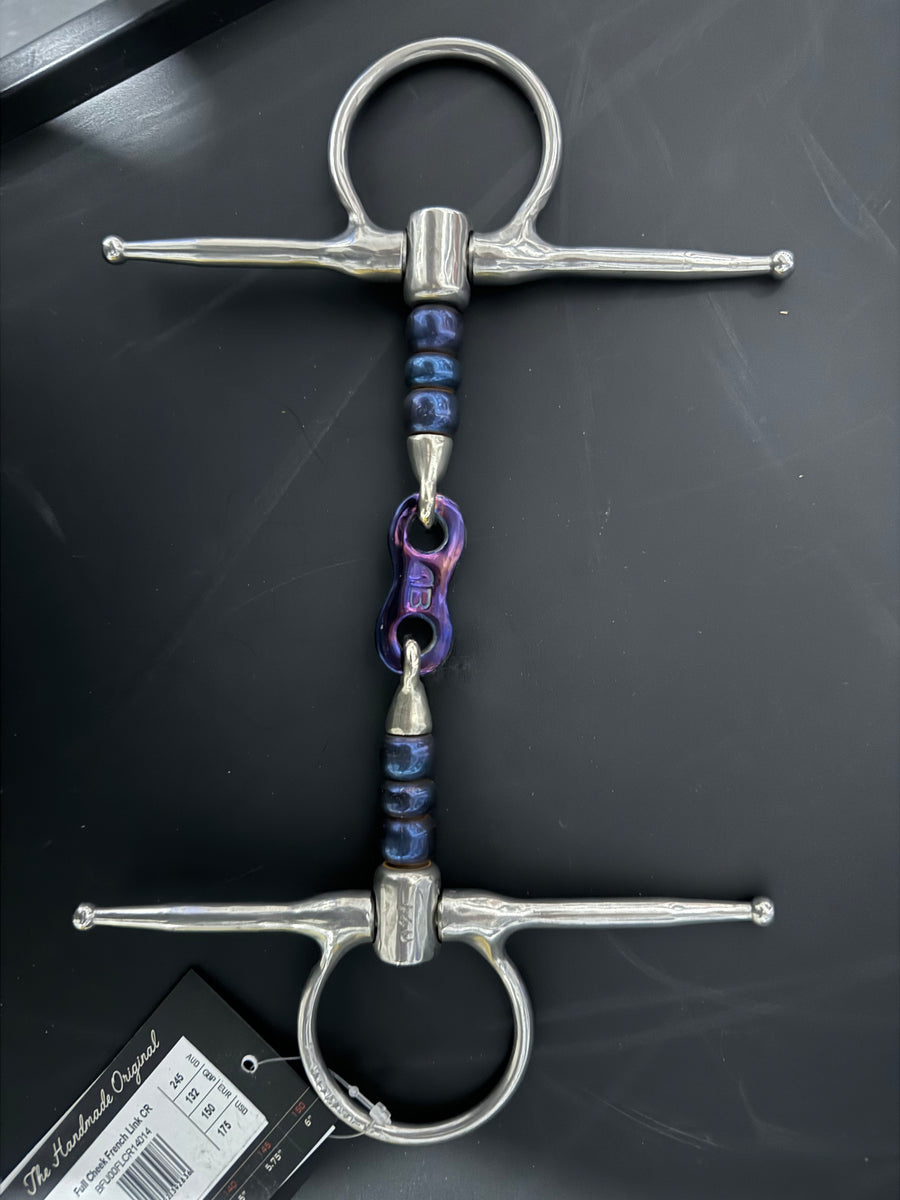
The defining feature is the extended cheek arms above and below the mouthpiece. These prevent the bit from sliding through the horse’s mouth and provide a guiding effect, making them especially useful for schooling, young horses, and horses that need help with turning and straightness.
When a rein aid is applied, the opposite cheek gently presses against the outside of the horse’s face. This helps guide the nose in the direction of the turn, making steering clearer and more supported.
Full cheek bits are widely used across disciplines, including dressage and show hunters, and are FEI and EA dressage legal when used with a permitted mouthpiece.
How does a Full Cheek bit work?
The full cheek design creates a more framed and stable feeling compared to a loose ring.
• Prevents the bit from being pulled through the mouth
• Supports clearer turning and steering
• Helps keep the shoulders aligned
• Reduces movement of the mouthpiece
This makes it particularly useful for horses that feel loose, inconsistent, or unclear in the contact.
When used with keepers (bit loops), the cheekpieces are held in a more fixed position. This slightly rotates the bit and can introduce light poll pressure, creating a more stable and connected feel, similar to a mild Baucher effect.
Why choose a Full Cheek bit?
A Full Cheek is well suited to horses that:
• Need help with steering or turning
• Fall out through the shoulder
• Feel unstable or inconsistent in the contact
• Are young or in early training
• Benefit from a quieter, more supported mouthpiece
It is often considered a go-to starting point for young horses due to the clarity and stability it provides.
Mouthpiece options and severity
Full cheek bits come in a wide range of mouthpieces, which determine the overall feel and severity.
• Smooth, double jointed or straight bar = softer, more even pressure
• Single jointed = more direct pressure on the bars
• Twisted mouthpieces = increased pressure and severity
As a general rule, the tighter or sharper the twist, the stronger the bit.
Frequently Asked Questions
Does a Full Cheek bit help with steering?
Yes. The extended cheek arms guide the horse’s head and make turning aids clearer, especially for young or green horses.
Do you need keepers with a Full Cheek bit?
Not always, but they are recommended. Keepers stabilise the bit further and introduce slight poll pressure, improving consistency in the contact.
Is a Full Cheek bit harsh?
No. The cheekpiece itself is not harsh. The severity depends on the mouthpiece chosen, not the full cheek design.
Is a Full Cheek better than a loose ring?
It depends on the horse. A Full Cheek offers more stability and guidance, while a loose ring allows more movement and freedom.

$200.00
The Fager Mattias is a thoughtfully designed double jointed sweet iron bit, created for horses...

$170.00
Caelo Rose Single Joint Full Cheek Horse Bit Suits: Horses in early training or breaking-in....

$170.00
Caelo Rose Elliptic Full Cheek Snaffle Bit – Australian Designed Designed for young or developing...

$200.00
Fager's Rubber Bits; For a Softer, Steadier ConnectionDesigned for sensitive horses, the Andrea Soft Rubber...

$200.00
Fager's Rubber Bits; For a Softer, Steadier ConnectionDesigned for sensitive horses, the Andrea Soft Rubber...

$180.00
Caelo Rose Mullen Full Cheek Bit – Australian Designed Suits: Senstive horses that need gentle...

$175.00
Caelo Classic Titanium Full Cheek Bit Suits: Young, sensitive, or reactive horses needing a soft,...

$215.00
The Barrel joint limits the nut cracker action and spreads the usual pressure over a...

$250.00
Fager Marcus is suitable for horses that you would describe as some of the following:...

$250.00
Fager Julia is suitable if you would describe your horse as the following; Strong, pulls/leans on...

$260.00
Fager's leather bits are highly beneficial for horses that exhibit sensitivity to most bits, dislike...

$250.00
Fager Julia is suitable if you would describe your horse as the following; Strong, pulls/leans on...

$200.00
Julia's double-jointed mouthpiece creates space for the tongue, relieving constant tongue pressure. The Copper Roller...

$125.00
ergonomical shape allowing an even distribution of pressure fits anatomically correct between tongue and palate...

$265.00
Fager Oscar is suitable if you would describe your horse as the following; Sensitive for...

$200.00
A Registered Design Fager John is the ideal choice If you would describe your horse...

$125.00
ergonomical shape allowing an even distribution of pressure fits anatomically correct between tongue and palate...

$150.00
1 x Pair of Stainless Steel Full Cheek sideparts to mix and match with Winderen...

$79.95
• This Snaffle is a medium weight bit, sized correctly for ponies and small horses.•...


$320.00
Winderen Gel Bits bits are made of durable synthetic gel that’s comfortable and readily accepted by...

$240.00
mouthpiece created to the anatomy of the horse's mouth, mouth- and tongue-friendly 45° angled middle...

$299.95
Myler Stainless Steel Full Cheek with Hooks, MB 03 Comfort Snaffle with Copper Roller, Level...

$295.00
ergonomical shape allowing a soft and even distribution of pressure, joint angled forward by 45°...

Sold Out
Preorder 4-6wks The Full Cheek cheekpiece will prevent pinching on the sides of the mouth,...

$175.00
Preorder 4wks The Full Cheek cheekpiece will prevent pinching on the sides of the mouth,...

$195.00
Fager Martin is recommended if you would describe your horse as the following; Pulls against...

$200.00
A Registered Design Fager Marcus is the ideal choice If you would describe your horse...

$70.00
Full Cheek Slow Twist Budget style bit used for hard mouthed horses typically in jumping phases

$255.00
Fager Oscar is suitable if you would describe your horse as the following; Sensitive for...

$200.00
If you would describe your horse as something with the following; Pulling on the bit,...

$185.00
Bombers Full Cheek Happy Tongue From Bombers Bits Bombers Full Cheek Happy Tongue Sweet Iron...

$200.00
If you would describe your horse as something with the following; Pulls/lean on the bit. Strong....

$270.00
If you would describe your horse as something with the following; Hard to seek connection towards...

$265.00
If you would describe your horse as something with the following; Stiff towards the hand Strong,...

$360.00
Specifically engineered to accommodate the larger or sensitive tongue. Often negates the need to shut...

$360.00
Neue Schule Full Cheek Turtle Top | 2-Week Preorder Designed with anatomical precision, the Neue...

$215.00
Sweet iron will rust when in contact with (air) humidity. The surface rust tastes sweet...

$225.00
A flexible soft mouthpiece can be used for all horses but are especially suitable for young...

$390.00
Preorder 3wks The Sprenger Full Cheek Dynamic RS lies very quietly in the horse‘s mouth...